The same word is used more than one way. That is not a contradiction. It is the difference between the person outside the faith and the spirit already at the table.
Toward the person who is honest about unbelief, the word of God is raised as a shield. That person may mock, question, sit in a magistrate’s chair, or simply ask why the household lives as it does. Peter’s scattered saints met that person. Paul’s chains were watched by that person. The answer in both views is still what is written. Speech is how the shield moves. A shield left on the ground does not cover anyone. Silence was never humility. It was often fear renamed.
The speech that moves the shield is not a performance. Jesus, pressed in the wilderness, did not build a case out of His own anger or intolerance. He said, “It is written.” That sentence performed two things at once. It answered Satan’s lie. It kept the speaker from becoming the source of the answer. He spoke what was written because that was what He had been given to say. The answer was not His own. That is how the defense works. The outsider may reject it. Yet, the outsider is still owed the word, not a brand, not a sneer, not a lecture about how untaught he is. Those are not in the conduct of Christ in the book. The written word is.
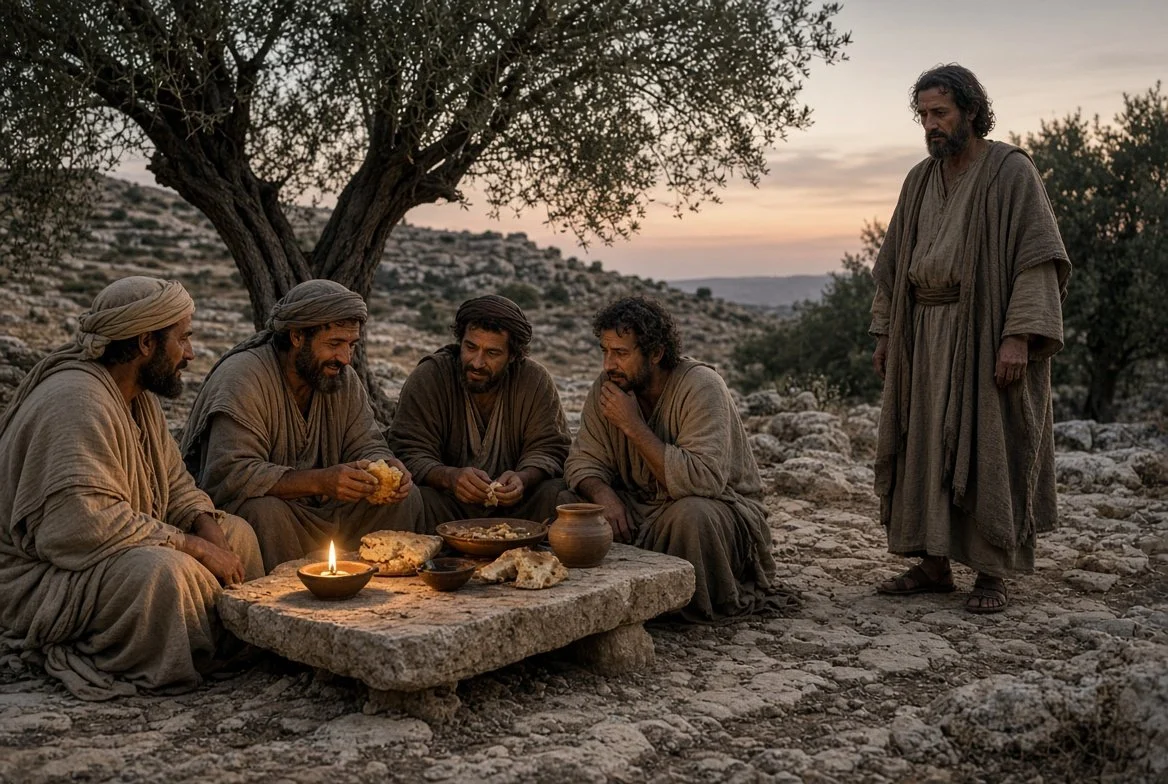
The harder use of the same word for defense is not outside the door of faith. It is at the table, when someone who already keeps the name draws a second line through a shared meal. The outsider is frequently more honest than the one who uses holy speech to train the body in another gospel. The unbeliever will tell you what he is. The inside man may not. He may keep the prayers and the right vocabulary and still split the body.
Antioch is the scene that shows the cut.
Peter had eaten with Gentiles. Men came from James, and he drew back, and the rest of the Jews acted with him, so that even Barnabas was led along. Paul saw that their conduct was not in step with the truth of the gospel. He opposed Peter to his face, before them all. He did not unmake Peter. He did not found a party called Paul. He named the segregation that had entered the meal. If you, a Jew, live like a Gentile and not like a Jew, how can you force the Gentiles to live like Jews? What came out of this defense? The body remained the body. The second table of exclusion and higher status was the thing that had to go.
That is how the sword is used. God prunes so the branch can bear fruit. The vinedresser is not the servant with the staff. Saying what is written is how the speaker stays out of that seat. At Antioch, the word cut a practice, not a brother. Peter is still Peter after the cut. The gospel is not a second gospel after the cut. The table is one table again, or it is not the gospel’s table.
Scripture already knows the difference between the deceived and the one who corrupts. Eve was deceived. Adam was not excused by her deception. That is not a tool for sorting people at a glance. A servant who enjoys the sorting has already left his place. Aim still matters. The person is not the enemy. The spirit that splits the table is our enemy. The aim is the power at work, not the person it is using. Jesus said, “Get behind me, Satan,” to Peter. Was He talking to Peter, or to the influence that had moved him? He was talking to the influence, and He was talking to it in Peter. A moment earlier He had called him blessed. The man stayed. The voice that would keep Him from the cross did not. Paul’s defense against Satan’s influence performed the same act in Antioch.
The sword is not a hunt for a camp. A label will not do what Antioch did. Antioch opened the truth of the gospel and set it against the conduct that broke apart the unity of the body. That is slower than a slur. It is also the only cut the writings authorize. Some of those inside fights will concern whether Christ is enough. The manner does not change when the subject gets holy. Strike the false spirit. Do not take God’s place.
The shield and the sword are not two religions. They are one word, aimed by the situation. Outside, cover the honest question with what is written. Inside, refuse the second table with the same word. In both rooms the speaker is the defended, not the defender of God. God remains the shield. Christ remains Lord. The servant speaks, and then he stays under the hand.
Find the ancient paths, where the same word covers and cuts.
William