The gospel’s claim about Christ’s priesthood is not a second Bible. The biblical writings had already marked another priest and priesthood. This post sets those established texts on the table. The argument Hebrews builds from them comes next.
Abraham and Salem
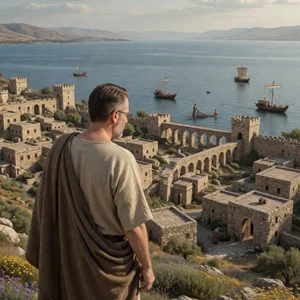
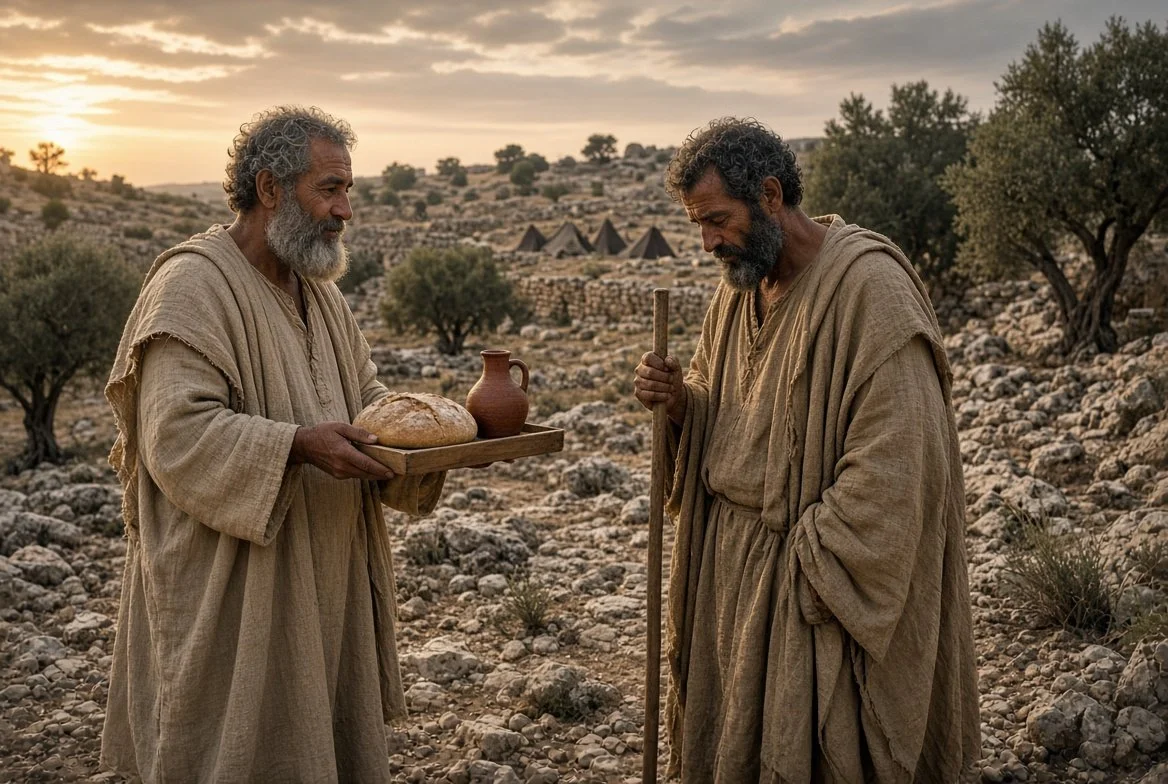
Genesis 14 comes before Sinai. Abraham has fought and won. Melchizedek, king of Salem, brings out bread and wine. The text calls him priest of God Most High. He blesses Abraham in that Name, and he blesses God Most High, who delivered Abraham’s enemies into his hand. Abraham gives him a tenth of everything.
The scene is short. It is not a side note. A priesthood stands in the narrative before Aaron is born, before Levi is a tribe, before any commandment about fleshly descent. The priest blesses Abraham. The patriarch pays the tenth to Melchizedek. Later the letter to the Hebrews will say what the scene already shows: the lesser is blessed by the greater. Levi is still in Abraham’s body when the tenth is paid. The ranking is in the story. It is a legal precedent and not casually fetched by an apostle who needed a loophole.
David’s Descendant
Psalm 110 comes after the law. David hears the Lord speak to his Lord: sit at My right hand until I make Your enemies a footstool. Then the oath. The Lord has sworn and will not change His mind. You are a priest forever after the order of Melchizedek. An oath in a psalm is not Moses inventing a way around Moses. It is God naming a priest the later commandment of bodily descent cannot produce. The order is Melchizedek’s. The duration is forever. The speaker is the Lord, and He will not repent of it.
The oath given to David is later than the Law giving at Sinai. The priest it remembers is earlier than Sinai. The two images agree. An earlier priest in the narrative. A later word that will not be taken back. Between them sits the commandment that priests come by flesh and tribe. That commandment is real. It ordered Israel’s altar for centuries. It is not the only word the book contains about priesthood.
An Often Overlooked Explanation of a New Priesthood
1 Samuel 2 sits in that stretch of history. Eli is high priest. His sons treat the offering with contempt. A man of God comes to Eli and recites what God had given his father’s house: the priesthood, the altar, the fat of the offerings. Then the judgment. Those who honor God will be honored. Those who despise Him will be lightly esteemed. The house will not walk before Him forever. God will raise up a faithful priest who will do what is in His heart and mind, and that priest will go in and out before His anointed always.
Abiathar is the last of Eli’s house to hold the place. When he is removed, Eli’s line is finished as high priest, and Zadok remains. The promise that raised a faithful priest is larger than Zadok. A faithful priest, a sure house, going in and out before the anointed forever, is more than a new Aaronic line. The writings have already named that larger order in Melchizedek. Here they show that no sitting family can keep the priesthood by inheritance alone. After Abraham, after Sinai, a sitting priestly house is not untouchable. God can tell it that its walk is finished. God can raise another to do what is in His heart. The priesthood is His to appoint. It was never a scepter the house could keep by inheritance alone.
These three texts are the table. Genesis 14. Psalm 110. 1 Samuel 2. They are not yet the full walk of Hebrews. They are what must be in view before that walk is honest. If they are ignored, a transfer of priesthood will sound like an apostle fetching water. If they are read, the next paper is only following a path the book already laid.
The staff in Part 1 was a shepherd’s tool, not a throne. The ephod is not a throne either. God gives the water. God appoints the priest. The writings had already said so, in a meeting before the law, in an oath after the law, and in a priestly house that was told it would not stand forever.
Find the ancient paths, where God appoints and removes as He wills, and we must obey.
William