The Rome Herald - Issue# 41
By your humble correspondent in Jerusalem, the 10th of Nisan, in the fifteenth year of Tiberius Caesar
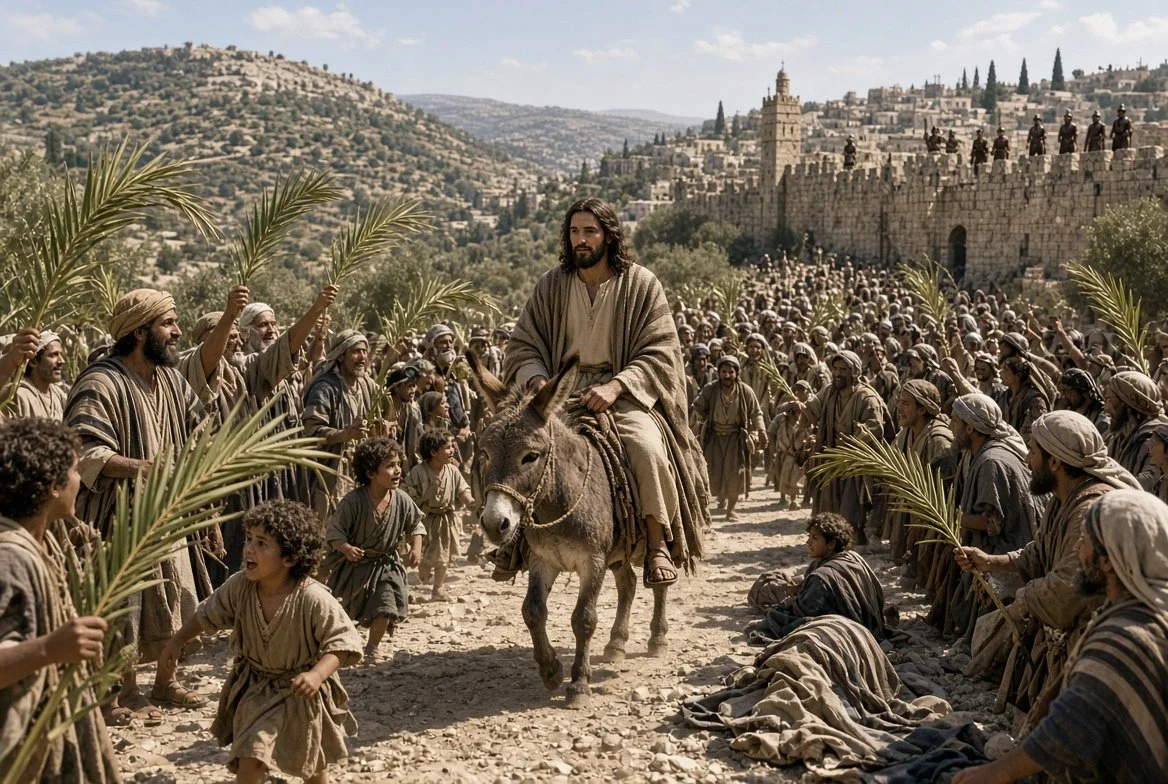
The dust had not yet settled on the road from Bethphage when the shouting started. A young colt, still skittish, picked its way over cloaks that people kept throwing down in front of it. Palm branches bobbed above the heads of the crowd. From my place near the gate I could see the rider, plain tunic, no armor, no purple, sitting on the animal as if the whole procession were ordinary. Children ran alongside yelling the old festival cry, “Hosanna.” A Roman auxiliary on the wall above me laughed once, then stopped when his optio (a junior officer) glanced over.
Further up the slope the line of people stretched back toward the Mount of Olives. Some of the older men were singing lines from the Hallel. Others simply stared. No one produced a weapon. No one demanded the garrison open the gates by force. The animal kept walking. The cloaks kept falling. And somewhere behind the Antonia the normal business of the festival continued: lambs being inspected, money-changers setting up, the usual arguments over purity.
By mid-afternoon, the story had already split into competing versions in the lower market. I collected three of them before the gates closed.
Voices from the Street
Marcus, auxiliary centurion: “I’ve stood in a proper triumph outside Rome. Face painted, captives in chains, the Senate walking behind. This? Old clothes and a farm animal. If the Jews think this threatens the emperor they have lower standards than I was told.”
Eliakim, teacher of the Law: “Zechariah said the king would come righteous and mounted on a donkey. They are shouting, ‘Son of David.’ Whether the man accepts the title or not, the crowd has already decided the prophecy is in motion. The Romans will call it nothing. They always do, until the oracle they ignore turns out to have been about them.”
Dionysius, Greek-speaking merchant: “In the gymnasium we learned that true kings do not need the crowd to name them. Epictetus says a man is free when he plays the role given him without grasping for another. This Galilean sits the colt as if the role were already his. The crowd is doing the grasping. I will wait to see whether he keeps the part when the festival ends.”
Kingdom Takeaway: The king who fulfills the royal script refuses the imperial one. Doubters will doubt. The cloaks and the branches were still thrown.
Which of the three voices above would have been hardest for you to dismiss if you had been standing in that crowd and why?
© 2025–2026 Galilee Publications
Rush the shores where the King is received with joy and shouts.