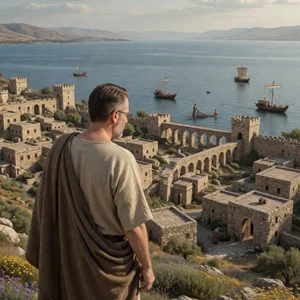
ANTIOCH DAILY - Issue #39
By your humble correspondent in Antioch, the 10th day of Nisan, in the 18th year of Tiberius
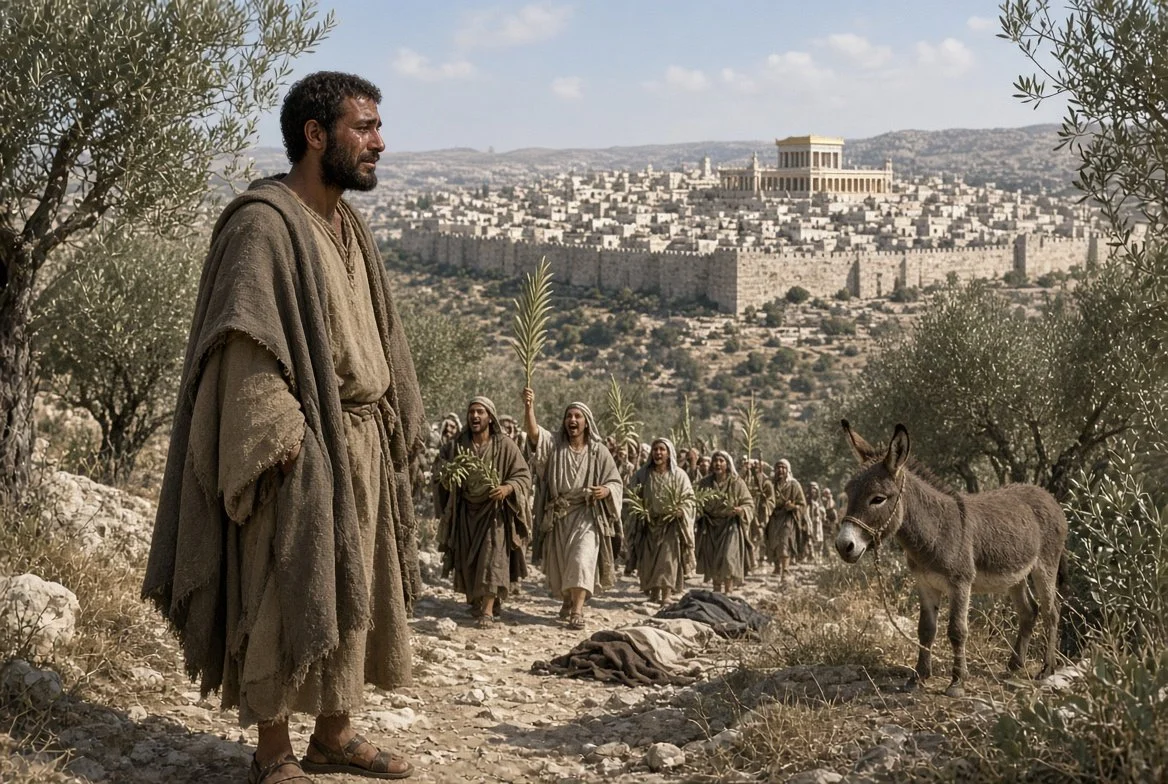
Dispatch from the Jerusalem road: the Galilean preacher came down the Mount of Olives with the festival crowd roaring “Peace in heaven,” looked across at the white city in full Nisan dress, and wept aloud.
Not the single official tear a public man allows so the room knows he is human. Witnesses used the verb for audible sobbing. A grown man. On the pilgrimage approach. With the whole road watching.
The crowds were doing what crowds do in Nisan. Coats in the dirt. Branches in the air. Boys shouting peace as if heaven had already signed. Rome sells a cheaper peace and staffs it with a tax office. This peace arrived on a borrowed colt, then stopped at the sight of its destination.
“If you, even you, had known on this day the things that make for peace,” he said, and the sentence broke the way a blessing breaks when the speaker can already see the end of the week. “But now they are hidden from your eyes.”
Jerusalem means foundation of peace. The name is perfect. The day did not match the name.
He then described what the city had not recognized, and he described it like a man who has watched how empires actually take a hill. Enemies will raise a palisade. They will encircle. They will hem you in on every side. They will dash you and your children to the ground. They will not leave one stone upon another. Because you did not know the time of your visitation.
In Antioch a visitation is what a governor does when he arrives with grain, games, and a flattering stone. In the older Scriptures the same word can mean God arriving to save or arriving to settle the account. This visit was the second kind disguised as the first, and the city missed it while the parade was still loud.
A generation later a Jewish historian writing for Roman readers would describe those same works in grim detail: ramparts, famine in the lanes, the Temple itself going over to fire. He also recorded another Jesus - Jesus son of Ananus - who walked those streets for seven years crying, “A voice against Jerusalem and the sanctuary.” They flogged him until the bone showed. He did not stop. The Galilean’s tears came first. The later voice only proved they had been heard too late.
The Pharisees had already asked him to silence the disciples. He had said that if they went quiet the stones would cry out. The stones would have their turn. Not in praise.
The theaters of Antioch know a mask when they see one. Festival week is a beautiful mask. Under it the prophets had already written a siege. The crowd kept singing. The man on the colt did not.
Cultural Shocks Most Modern Readers Miss
The shock is not that a man wept. It is that he wept on a victory road. Jewish memory already knew public tears. David climbed this same Mount of Olives weeping. Jeremiah earned the name “weeping prophet” by grieving the city before it fell. Lament in the streets was not a crack in honor; it was how a prophet told the truth when the feast would not. The scandal is timing. The crowd was shouting peace and laying coats in the dust. He used the older script: tears first, then the oracle the parade did not want.
“Visitation” was official language before it was church language. Cities staged processions for a patron’s arrival and hoped for benefaction. Scripture uses the same word for mercy and for judgment. Luke has already used it for mercy. Here the window closes in daylight.
The warning is not foggy doom-talk. Palisade, encircle, hem in, level, no stone on stone, that is how Rome takes a city. Josephus later writes the same procedure at Jerusalem in 70. The crowd heard a festival. He was reading them a field manual.
The calendar made the contrast almost unbearable. The tenth of Nisan is when Israel sets apart the lamb. The city welcomed a king and did not know what it was looking at. Four days later the week would choose another offering. Liberation’s feast became the week the city of peace refused the only peace that would have held.
Ignored warnings tend to grow louder, not kinder. Josephus’ later woe-crier spent years on the same theme and died mid-sentence when a siege stone caught him on the wall. The first tears were not a mood. They were the opening column.
Biblical Shocking Takeaway
The city named Peace shouted peace at its King, and He wept because shouting is not the same as knowing.
If a city can miss its day of visitation while the parade is still in full voice, what would it look like to recognize yours before the road goes quiet?
© 2025–2026 Galilee Publications
Rush the shores. The coats can stay in the dust. Know the day.