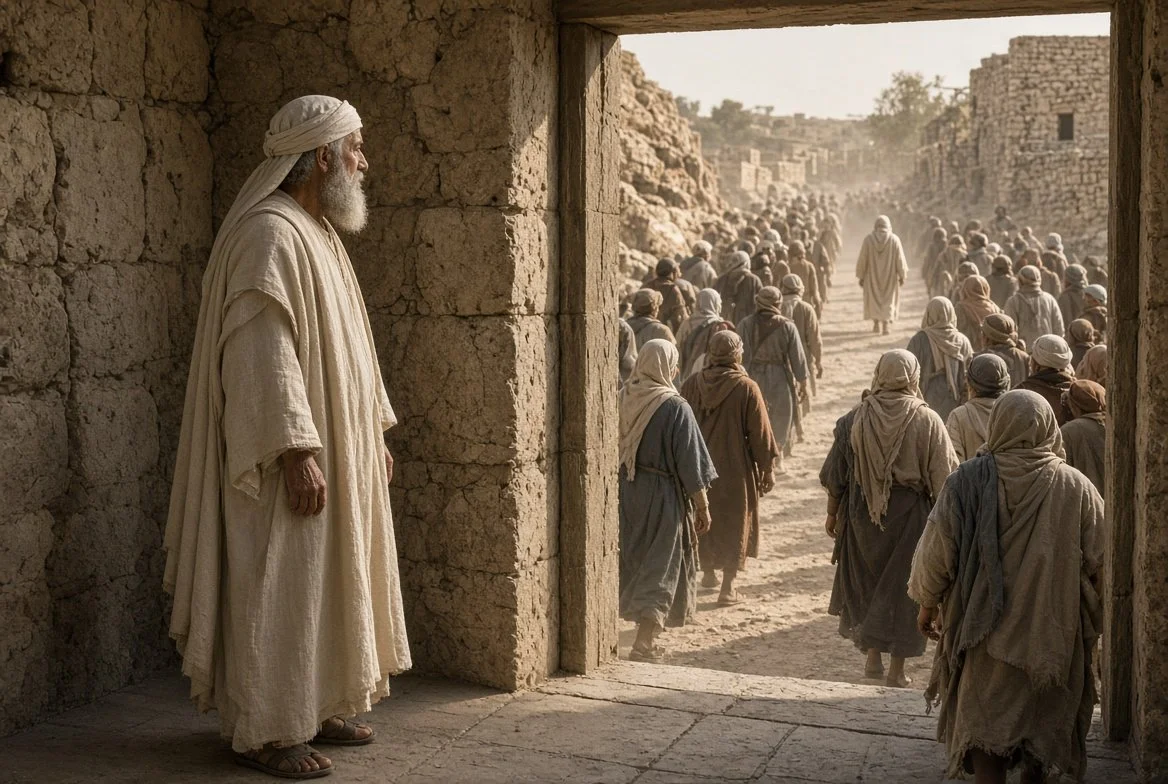
This is what defense looks like when it is doing work.
Our claim is the good news of the kingdom of God, not a side topic. Jesus is the priest who can save to the uttermost those who draw near to God through Him. He always lives to intercede. If that is not true, the rest of the gospel does not hold. If our claim is true, it has to be shown from the writings. It cannot be fetched as a new religion, and it cannot be denied as if the writings had never marked another high priest and priesthood.
Hebrews 7 does that work with Genesis 14 and Psalm 110 as the foundational groundwork.
Melchizedek meets Abraham before the law. He is priest of God Most High. He blesses Abraham. Abraham pays the tenth. The lesser is blessed by the greater. Levi is still in Abraham’s body when the tenth is paid. Abraham paid through his own acknowledgment of the greater. A priesthood already stands in the story that Aaron does not create. The later commandment of fleshly descent orders Israel’s altar. It does not erase the greater priest recognized by that great man of faith.
The psalm then swears, after the law, that David’s Lord is a priest forever after that order. The Lord has sworn and will not change His mind. Hebrews says the word of the oath came later than the law and appoints a Son. The fleshly commandment to Aaron cannot produce that priest. Judah is the tribe of David, and Moses said nothing about priests from Judah. The oath names Him anyway.
Hebrews says that a transfer of priesthood means a transfer of law as well. The Greek here is metathesis. The word means a putting in another place. The same family of words is used when Enoch is taken. The priesthood is now transferred. The law bound to that priesthood is transferred with it. That is necessity, not a second staff. A priestly order and the rule that made it are tied together. Move the order, and the rule tied to it moves. That is not a claim that the writings were discarded. It is the movement required when God appoints a priest the fleshly rule cannot make.
The writer then uses a different word. There is an athetēsis of a former commandment because it was weak and unprofitable. Athetēsis is a setting aside. He does not say the book was thrown out. He says the preceding command, the law of a fleshly commandment, priests by bodily descent, could not perfect anyone. The law made nothing perfect. A better hope is brought in, and by that hope we draw near to God. The distinction is in the sentences. Transfer of the law bound to the priesthood. Setting aside of the former commandment that appointed priests by flesh. A reader who flattens those into one slogan is no longer reading the paragraph.
The removal of Eli’s house from the high priest’s appointment is history’s witness, not the engine. After Sinai, a sitting priestly line is told it will not stand forever, and that God will raise a faithful priest who will do what is in His heart. The first fulfillment in that book is inside Israel. Abiathar is the last of Eli’s house to hold the place. When he is removed, that line is finished as high priest, and Zadok remains. The larger line the writings were marking is the coming Son. God had already shown believers that a house does not keep the altar by inheritance alone.
This is defense. The page is held up. God appoints priests. The church does not produce the water. Moses remains a servant with a shepherd’s staff. Aaron’s ephod is not the last word the book contained. Christ is the priest the oath named. He offered Himself once. He lives to intercede. Those who draw near through Him are saved to the uttermost, not by a line of men who fetch access, but by the priest who does not die and does not hand the work to another.
Camps cannot do this work. A label cannot do this work. What is written, read, and believed can. God makes His people stand. They do not make Him stand. The people return, not to fetch, but to hear the One who still gives what they cannot produce, and to speak only after they have listened.
Find the ancient paths, where the written word is our path to truth and a proper defense of the gospel.
William