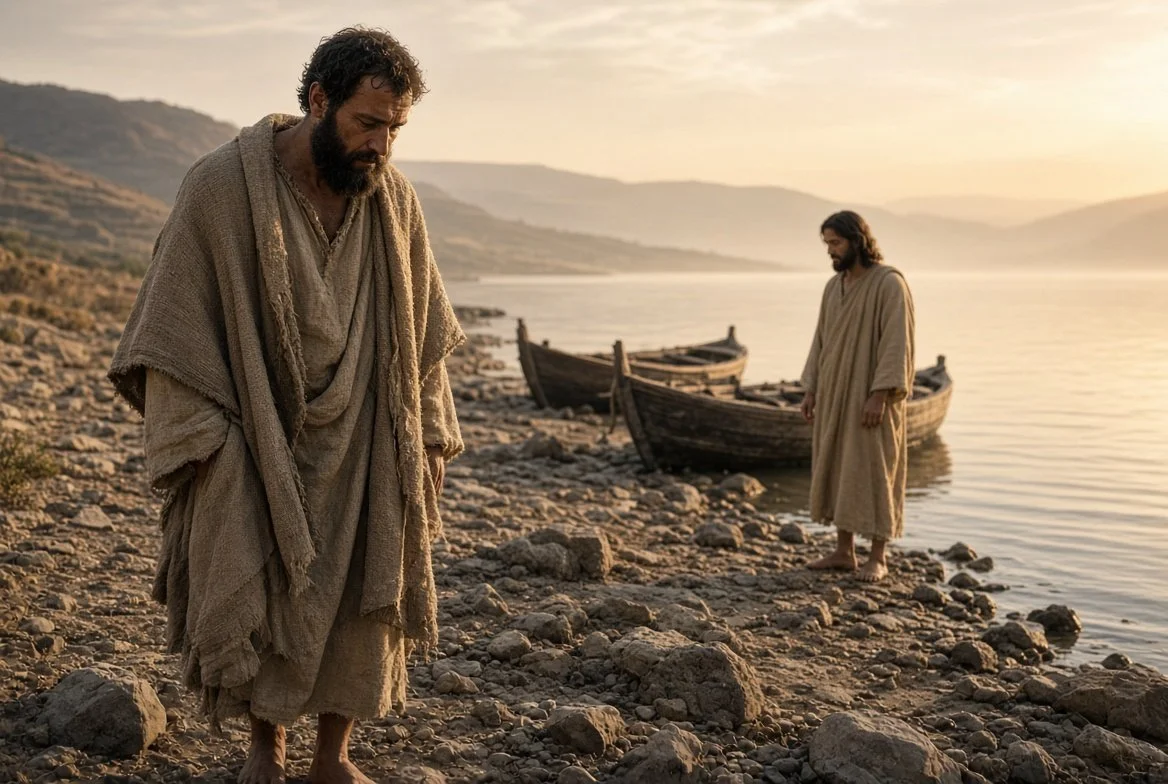
The Gospels leave Peter’s failure open on the pages. He had already been called. He had already spoken in the name of Jesus. He had already shared in the authority, power, and working that accompanied the ministry. When the test arrived in the courtyard he denied Christ, under oath, in public, and went out and wept bitterly. The man who had claimed superior loyalty was made to see the gap between what he had said and what he would do.
That clear sight is not treated as a private matter that can be set aside once the work begins. By the sea, the questions come three times. “Do you love me?” Each answer must be given under the knowledge of the One who already knows. No remaining assertion of strength is left standing. Failure is fully realize. Only then does the commission follow: feed the lambs, tend the sheep, feed the sheep. The text places the entrusting of the flock after the exposure and the acknowledgment. Peter does not receive that instruction beforehand.
The narrative therefore invites a fair question rather than a settled claim. How deeply had any earlier transformation taken hold in Peter? Whatever had occurred before the courtyard - calling, proximity, authority, the Spirit’s working - was not enough to prevent the collapse when the cost became personal. The failure remains visible. The commission is given only after the spiritual mirror has done its work.
The same man later writes the instruction that defines the care of the flock: shepherd willingly and eagerly, not for gain, not domineering over those in charge, but as examples, looking to the chief Shepherd who laid down his life. The public record of the gap between claim and conduct is part of what makes that instruction intelligible. The cost of the commission includes the honesty that had to be faced before the work was entrusted.
The text functions as a mirror. It refuses to leave the failure hidden. Before the flock is given, there is the clear sight of what was actually true in the moment of testing. That sequence is what the narrative supplies.
Look into the mirror. The commission is given on the other side of it.