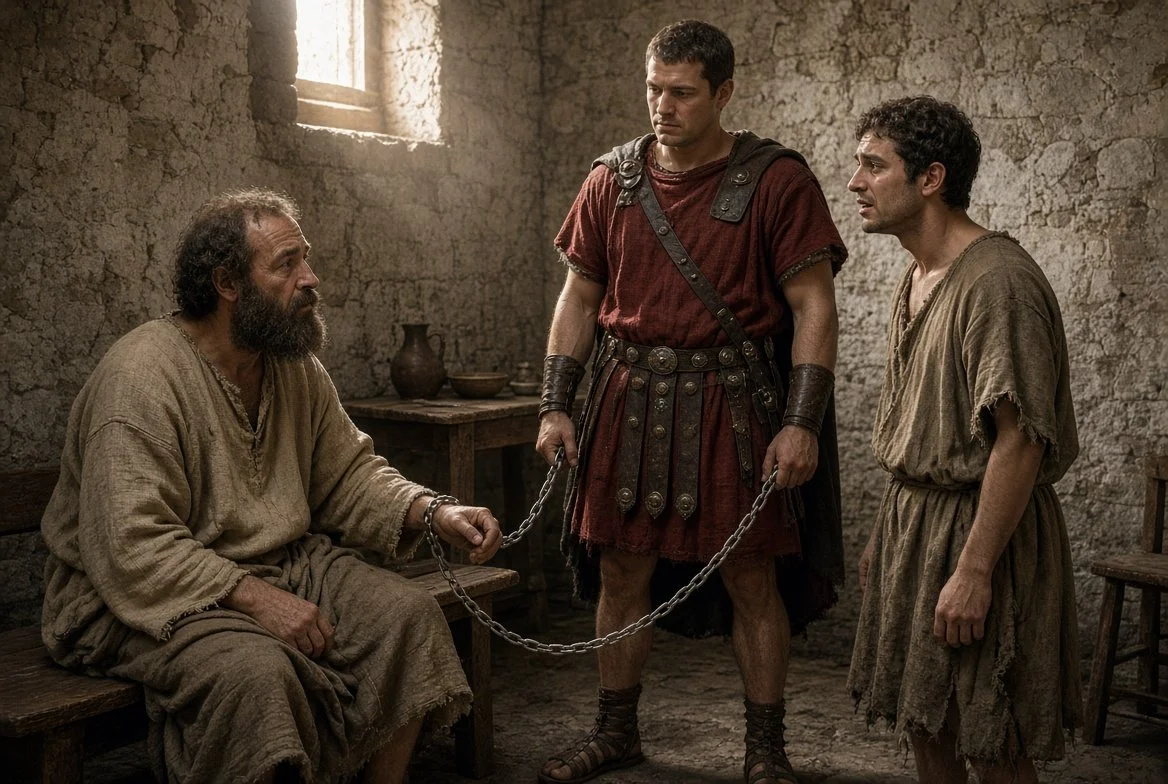
Onesimus abandoned a household where the gospel was already known. The church in Colosse met in Philemon’s house. The declaration had already been written and was known among them: in Christ there is neither slave nor free. Yet Onesimus still ran away, crossed the distance to Rome, located the rented lodging where Paul was confined, and walked into a room where a soldier stood chained to the apostle’s wrist.
There he confessed what he was. A runaway slave. Roman custody was already in the room. Being a runaway was a serious offense, and the soldier’s chain meant the empire’s authority stood in the same space. Nothing about the ordinary path of a fugitive required him to enter that house and name himself. He did so because he judged that what he had heard in Colosse had not yet been practiced in full. He risked the guard and the chain on the hope that the gospel Paul preached could receive him as more than property.
Paul became Onesimus’ father in imprisonment. Two men in different chains yet subservient to circumstance. Then Paul sent him back. The letter does not command Philemon; it appeals. It asks that Onesimus be received back no longer as a slave but as a beloved brother, both in the flesh and in the Lord. The same apostle who had already written that there is neither slave nor free still had to ask a Christian owner to live that truth with the particular man who had fled his house and then returned. The appeal itself shows the distance that remained between the declaration and the daily practice.
Onesimus carried the letter home. He had already confessed his status before the soldier; now he trusted that the same reality which had received him under guard would reorder the household he had left. The letter ends with the appeal, not with the outcome. It leaves Philemon free to choose, and it leaves the reader with the cost of the confession and the courage of the return.
In Christ, the standing is already settled. The practice of brotherhood still has to be chosen in the concrete relationship. Onesimus moved toward the place where that practice was being lived, confessed what he was before the Roman soldier, and carried the appeal back into the house where it had been only partial. That is the faith the letter records.