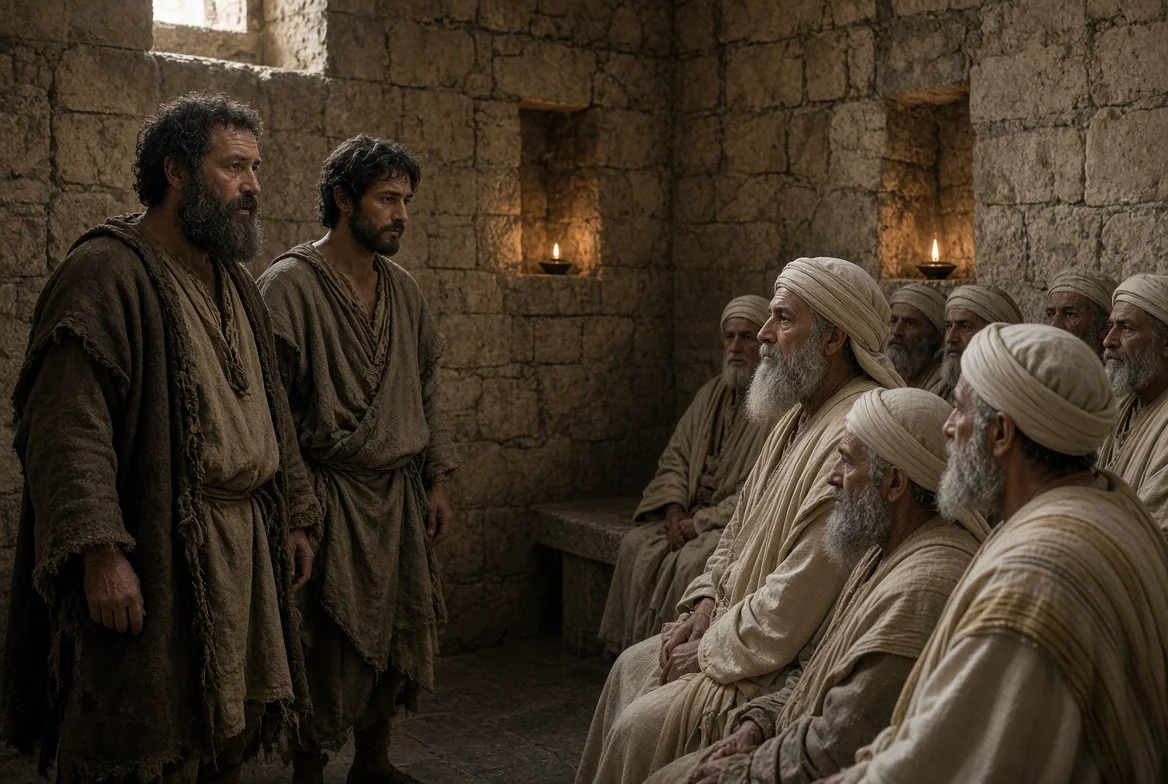
The trial leaves two failures in the same courtyard. Peter, recognized and pressed, denies three times that he knows the man on trial. John stands inside the high priest’s circle, known to the household and able to enter, and says nothing while the examinations move forward. One failure is spoken. The other is silence in the room. Both men leave the night having offered no defense for their friend.
Weeks later the same two are brought before the same circle. Annas, Caiaphas, and the high-priestly family sit in judgment after the healing at the Beautiful Gate. The council asks by what power the man has been made well. Peter answers, John beside him:
“by the name of Jesus Christ of Nazareth, whom you crucified, whom God raised from the dead… This Jesus is the stone that was rejected by you, the builders, which has become the cornerstone.”
The sentence is spoken in their hearing. The earlier denial and the earlier silence are not erased. They give weight to what is now said aloud. The same room that once received “I do not know him” now receives the crucifixion and the resurrection stated as fact.
They are ordered not to speak or teach in the name. Their reply places the command under a higher hearing. Whether it is right to listen to the council rather than to God, the council itself must judge. They cannot but speak of what they have seen and heard. The refusal is public. In naming the crucifixion and the resurrection before the men who carried it out, they appeal to the righteous judge who is listening. The Sanhedrin is subject to the Judge and they are being witnessed against.
They leave, are later beaten, and return to the temple courts. The prayer Jesus made for Him to strengthen his brethren is in full effect. From that point the witness moves outward, from the temple and the houses and beyond Jerusalem. What was spoken to the Sanhedrin is carried into the world, still under the same appeal. God is the one who hears, and the truth stands.